'the same room'
A maxim, a tool, a way of seeing the world...
In any situation, we must make the gap between humans, and between humans and reality, as small as possible.
Apply this to more or less everything.
In other words, we must get in the same room with one another, whether at work, our social and love lives, in how we govern ourselves, and in our relationship with reality itself.
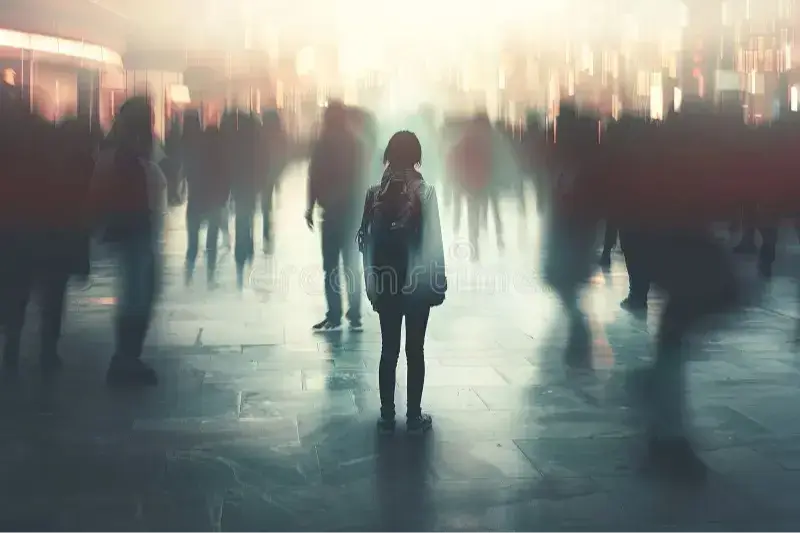
'the gap'
From warfare, to the individual, to society and the state, the gap between us, between each other and what matters to us, and what we experience and deal with every day, is growing bigger and bigger. This separation is alienating us from each other, ourselves and reality itself.
That's the gap.
What does this mean?
In war...
The distance of subject from object makes mass killing more palatable for those doing the killing. The Hiroshima bomb was dropped from 30,000 feet; the bomber was many miles away by the time the bomb exploded. In the US, the public was not told about the human consequences of the bomb until months if not years later, and even then, only in minimal detail.
In World War Two, German soldiers on the Eastern Front found the up-close experience of shooting Jews, and other Polish or Russian civilians, too upsetting - they were spattered with blood; it was distressing to look into the eyes of those they were murdering. Instead, the Nazis built gas chambers to 'industrialise' murder and render the act separate and invisible, making possible the killing of millions.
Today, AI and robot drones separate the killer from the killed. As a result, in today's wars, far more civilians are killed than combatants. There is the gap.
Human relations...
We only really exist in relation to one another. If we were utterly alone, we would cease to be human: really, we would cease to exist. This is why solitary confinement is such 'inhuman' torture. Close to one another, we feel 'seen', affirmed, real. The more distance between us, the more hate, distrust and misunderstanding flourish. The greater the gap that divides us.
Love...
Dating apps have made dating mechanical, transactional, and dehumanised, removing the spontaneity and happenstance of meeting in person, ticking boxes instead of flirting. Love is eroded by distance, whether physical or virtual. The gap that separates us.
In race and nationality - we are the same, with the same needs (for safety and survival), wants and dreams, wherever we are from. But the depiction of other races or religions as sub-human or non-human ('animals', 'cockroaches'), or labelling them as merely things, like 'migrants', makes abuse, repression and ultimately genocide possible. That's the gap.
At work...
The bigger the separation of boss from those bossed, the greater the disenchantment and depersonalisation of the workplace. Today, managers deploy AI to monitor employees' performance and commitment. In a very real way, humans have become controlled by machines. The resulting stress, disenchantment and depression are evident. That's a power gap - between those who tell, and those who must do.
Ownership...
When owners - hedge funds, shareholders - are distant from employees, it becomes easier for them to treat workers (i.e. real, breathing people) as numbers, costs, even 'disposable human capital', making them objects. It's the gap between a real stake and mere servitude.
Government - government and 'politics' feels distant and out of reach. Politics and politicians themselves are attacked and abused. We have no control over the things that matter to us. The state is not the people, indeed it controls the people, through rules, police and prison. We have no access to the decisions about our affairs. The gap between the system that decides our fates and control and agency over our affairs.
International relations - decisions of war and peace are made by leaders and governments who are separated from the real consequences, and based on the manufactured (and inherited) logic not of people but of states and their 'interests'. The gap between the prevailing 'system' of international relations and real, living, bleeding people who must deal with its consequences.
Sense of 'self'...
To survive in contemporary capitalist society, we must adopt false personas - masks - to survive and get ahead: the manager, the salesperson, the boss, even the entrepreneur in jeans and black polo-neck, supposedly the image of contemporary 'freedom'. But the greater the distance between the persona and our true selves, the less free we are, the less we can be truly ourselves, the more the gap between how we are and how we might be, if finally free.
Words and numbers...
Our society is increasingly mediated and organised by numbers and words, and digits in machines: units and terms of description, organisation or measurement which are always less - much less - than the totality of reality itself. What is most important to humans lies beyond in what cannot be named or given terms. And we have lost that. The gap is between the material, the measurable, and the ineffable and infinite.
And reality itself...
The more we are removed by intermediaries from the experience of real life, the more disembodied we become and the more alienated from our true selves. Nature can only be experienced in the flesh. Computers, phones and now even glasses separate us from reality. The gap between the real world and our mediated perception.
The same room
So what can we do. We must get in the same room. That means:
At work - shorten the gap between the bosses and the workers: get in the same room together. Whether a company hospital or a school, all those with a stake must be in the room - nurses, porters, patients, doctors, teachers, kids, parents.
In ownership - in a company (and indeed all enterprises, such as water or railways), ownership must be shared among those with most at stake: the people who actually work there. Their lives, jobs and futures are at stake, so they should have a stake.
In society - we should always default to being together in person, not remotely or on a screen. In person, we 'see' one another, we read them better, we understand each other better: we are more inclined to compromise, to agree, to listen. Meet in the same room.
In government - the more those most affected are part of decision-making, the better the decisions will reflect their true interests, and the more control and agency they will have - and feel. All decisions, all those affected, all in the same room.
In international relations - bring those most affected into the negotiations and closed places where decisions are made about them. Humanise what has become dehumanised. Everyone with a stake in the same room.
In relationships - the greater our proximity to one another, the more we see, the more we understand and forgive. The more we can love. We need to be as close as possible to each other - in the same room.
In our own selves - the more we get rid of the false personas that society forces upon us to survive or get by, the more we can express ourselves fully, be what we wish, what we can be. Our true selves and the person we are in the world must dwell in the same place, the same room.
In description - we must rely less on terms - numbers, words - to measure and arbitrate our lives and reality. What lies beyond terms must be included in any encounter with reality and in our experience. The immaterial and ineffable must be given space in the same room.
In reality itself - the less separated we are from the actual experience of living, the more we are nourished, the more we feel alive. We must be immersed in the real and the 'now'. At one, in the same room.
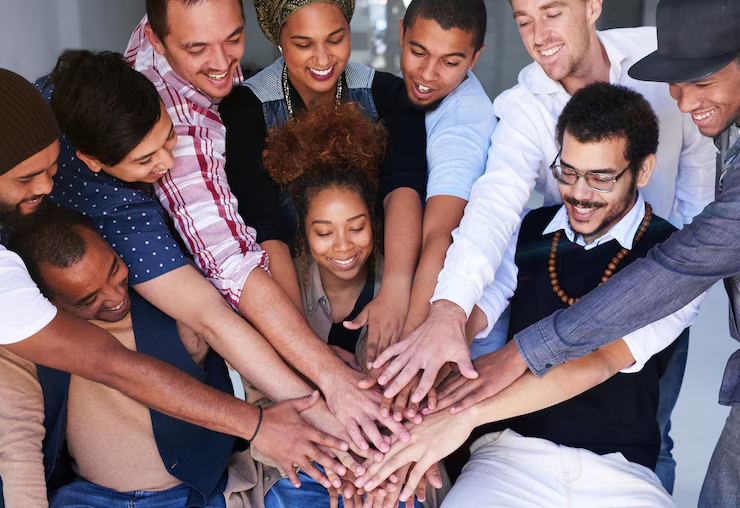
In the same room, we are together, we cooperate, we agree, we respect, we listen...
When we are allowed to express our true selves, free of masks, fake persona and unbound by rules made by others, when we are in the room with ourselves, we can be truly human.
At last.
Get in the same room
Subscribe for updates
For updates and videos, including online discussions, subscribe here.
Subscribe for updates